Field notes that hold up when there's no signal.
I co-founded ZiaMap and designed its field documentation platform for licensed land surveyors and civil engineers, taking it from beta in May 2026 to a live launch.
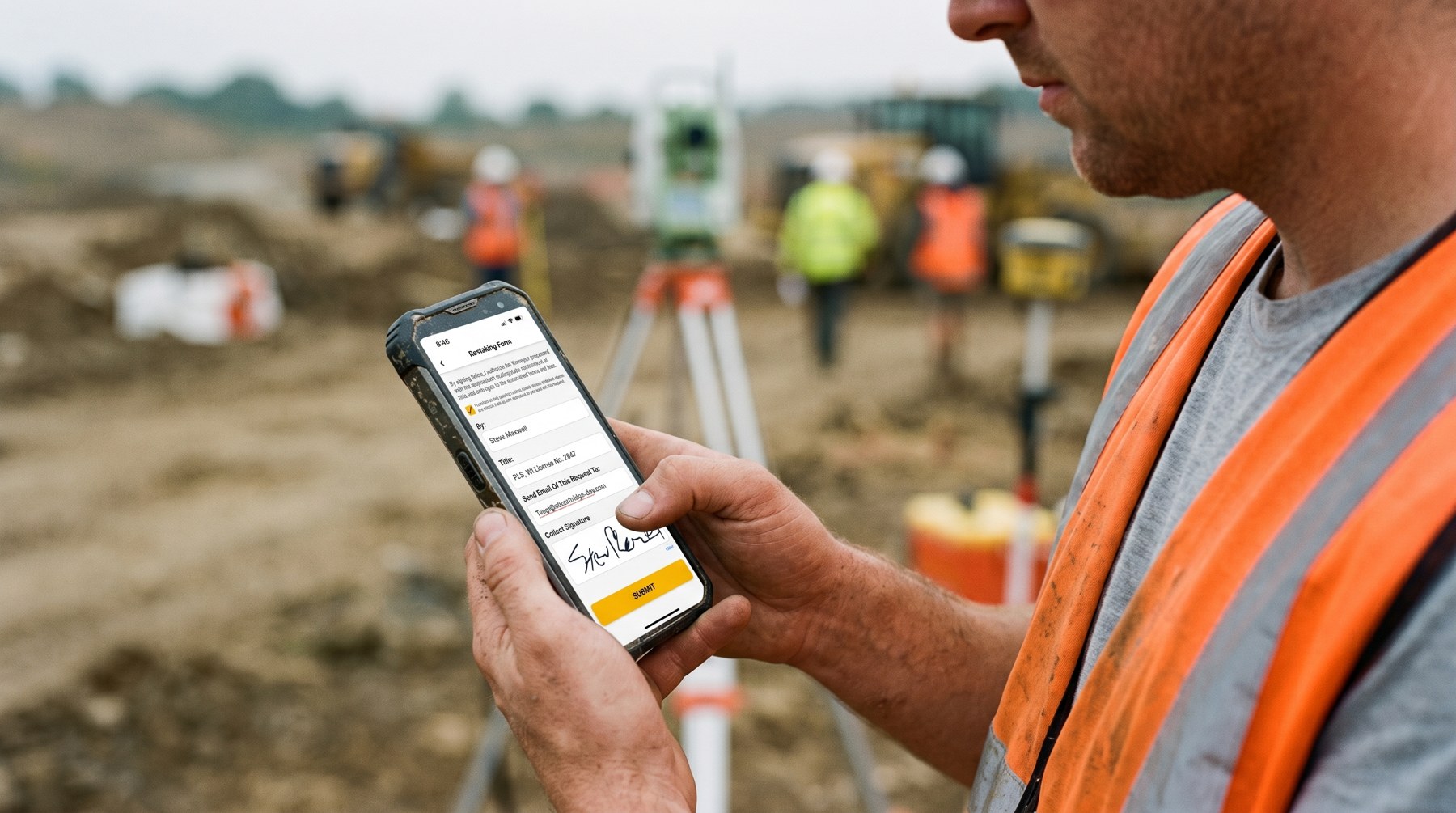
Survey crews document in the field, but review happens back at the office.
Crews capture evidence and notes in places with weak or no signal, and a licensed surveyor has to review and accept that work before it counts. Most crews still record it in a paper field journal, a habit that has barely changed in generations. Our predecessor product, ZiaMapper, only organized site photos. ZiaMap replaces the journal itself: notes, observations, photos and sketches.
Co-founder, owning product design and the customer experience.
As Co-Founder and CMO, I lead product design, marketing and customer experience. I work alongside our founder, a second-generation surveyor with 30 years in the field, and two Rails developers who build what we design.
Learn the domain before drawing a screen.
I'm not a surveyor, so I started by interviewing one: our founder, whose 30 years in the field shaped the first flows. As we near release, we're interviewing working surveyors, and I fill the gaps with my own research on the web and with AI tools. One constraint came up early and never moved: crews work where signal drops, so the app had to work fully offline.
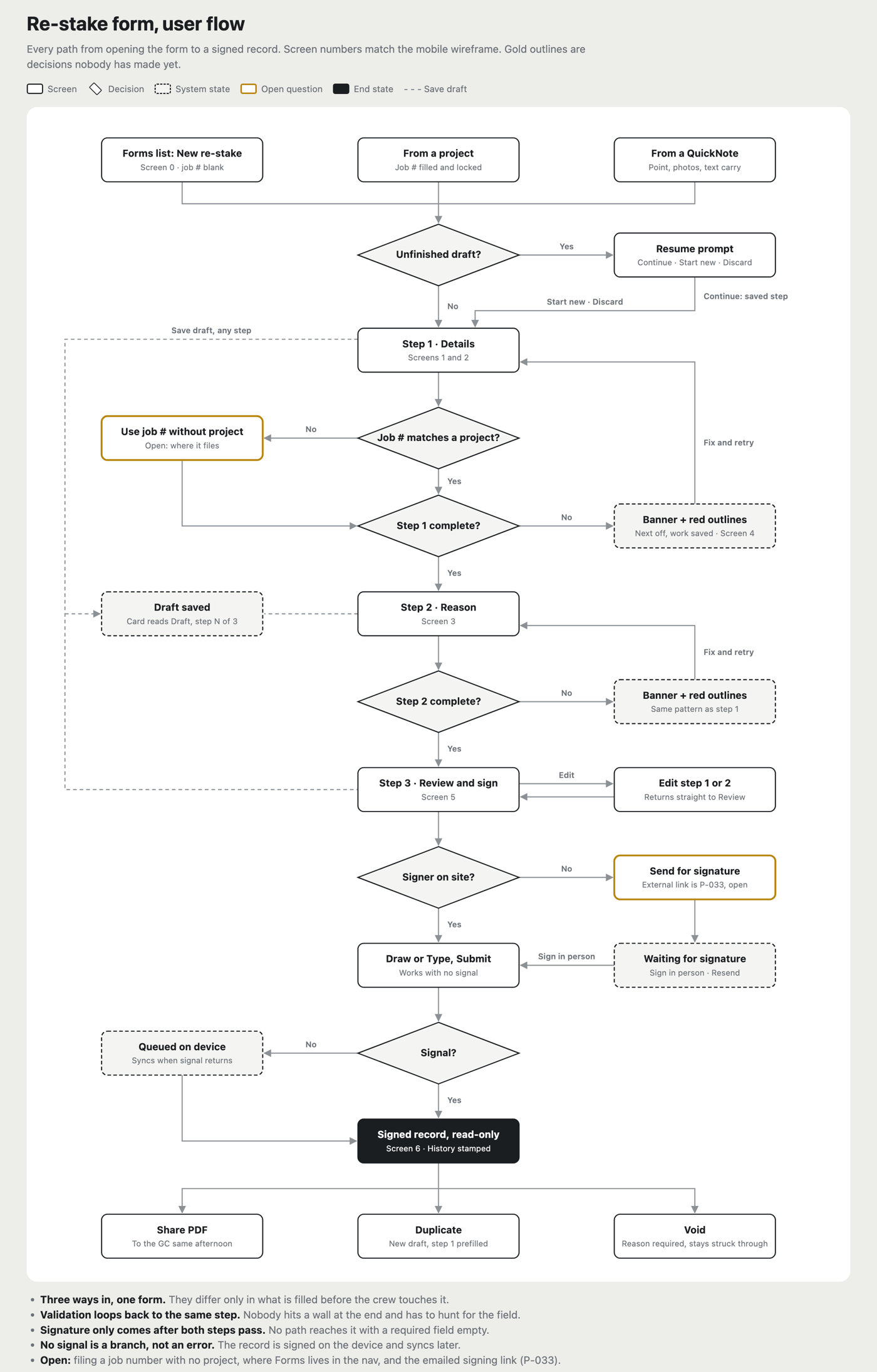
Before wireframing a screen, I mapped every path from opening a form to a signed record. Three ways in lead to one form. Validation loops back to the step that failed, so nobody hits a wall at the end. Signature only comes after every step passes. And no signal is a branch, not an error: everything the crew enters is stored on the device and syncs when signal returns.
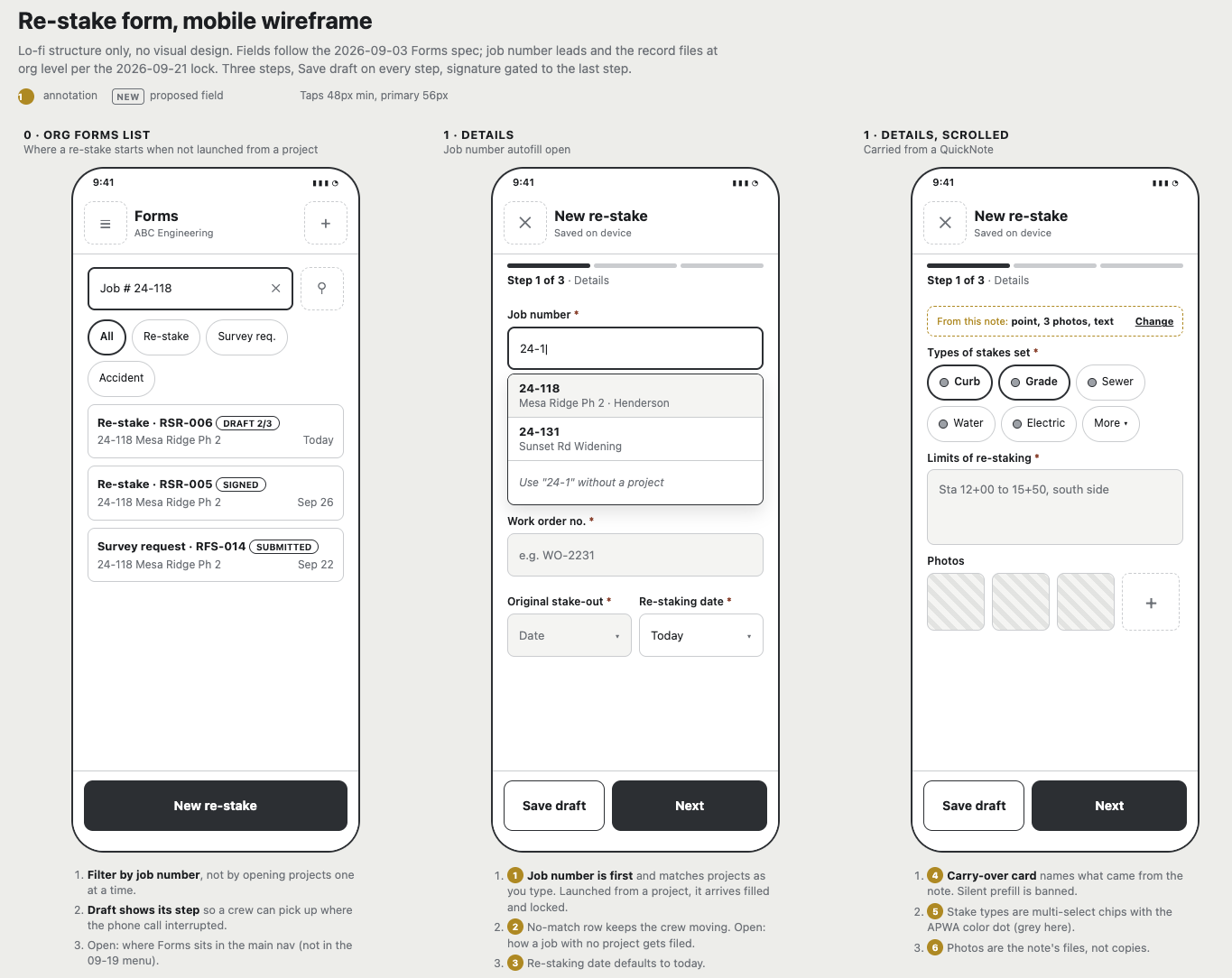
From wireframe to a shipped form.
Version 6.0 of the re-stake form is built from the app's own stylesheets, and the job number still comes first: it matches projects as the crew types and suggests near matches, so a typo never creates a phantom job.
The gap between the wireframe and what shipped is the point. The wireframe was a proposal, not a spec. Working it through with our developers, the same design-and-dev feedback loop I built at Duro and Surefront, changed three things. Three steps became one scrolling form, with rarely used fields folded under Additional information. A confirmation checkbox plus By and Title replaced the drawn signature, so the PDF records who entered it. And offline, the form keeps everything on the device, but Save Draft and Submit go grey and say why until signal returns, instead of queueing a submit nobody can see. I also mocked up a review-and-sign screen that reads each section back with an Edit link and offers Draw or Type signatures; it's parked for a later release.
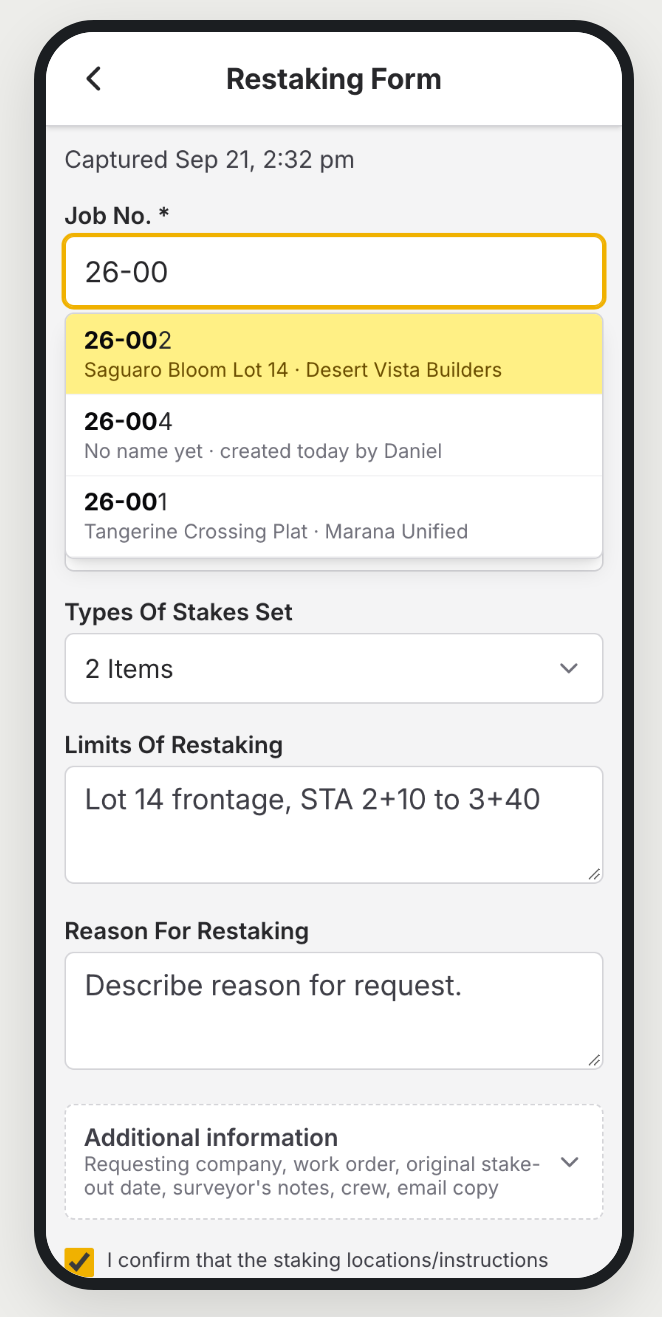 JOB NO. FIRST · MATCHES PROJECTS AS YOU TYPE
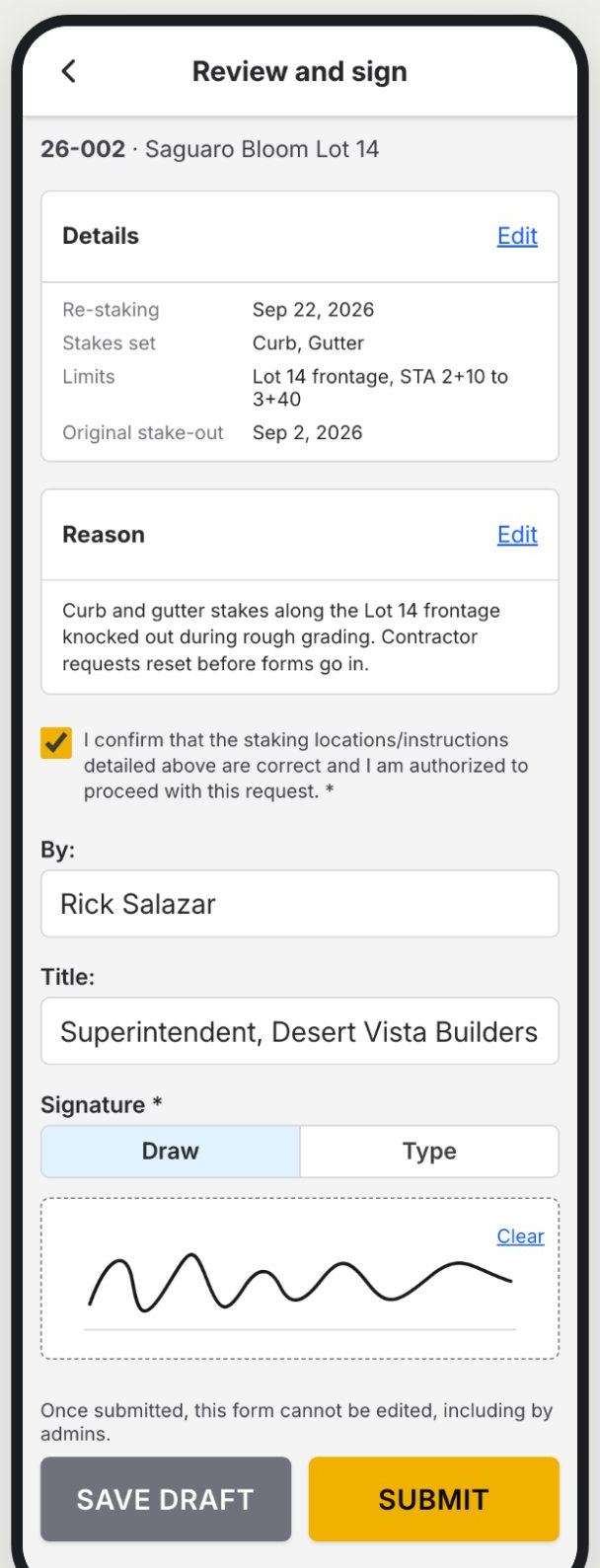 REVIEW AND SIGN · CONCEPT, READ-BACK BEFORE SIGNING
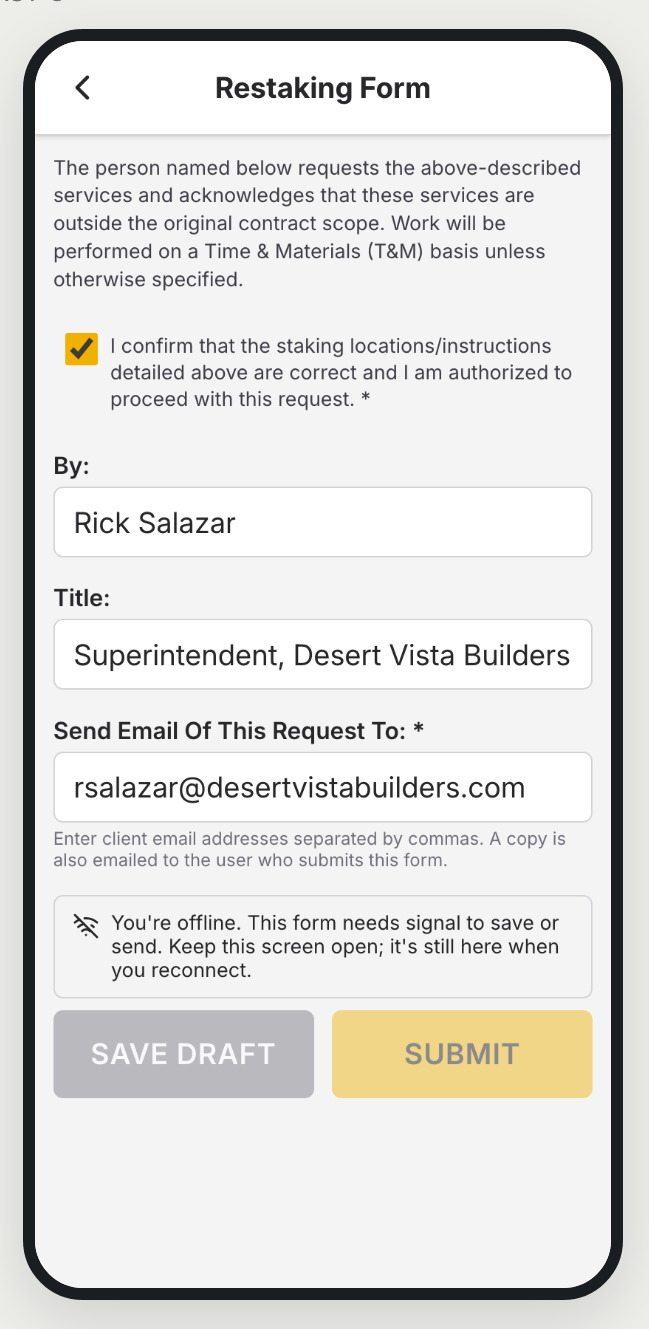 OFFLINE · SAVE AND SUBMIT SAY WHY THEY'RE OFF
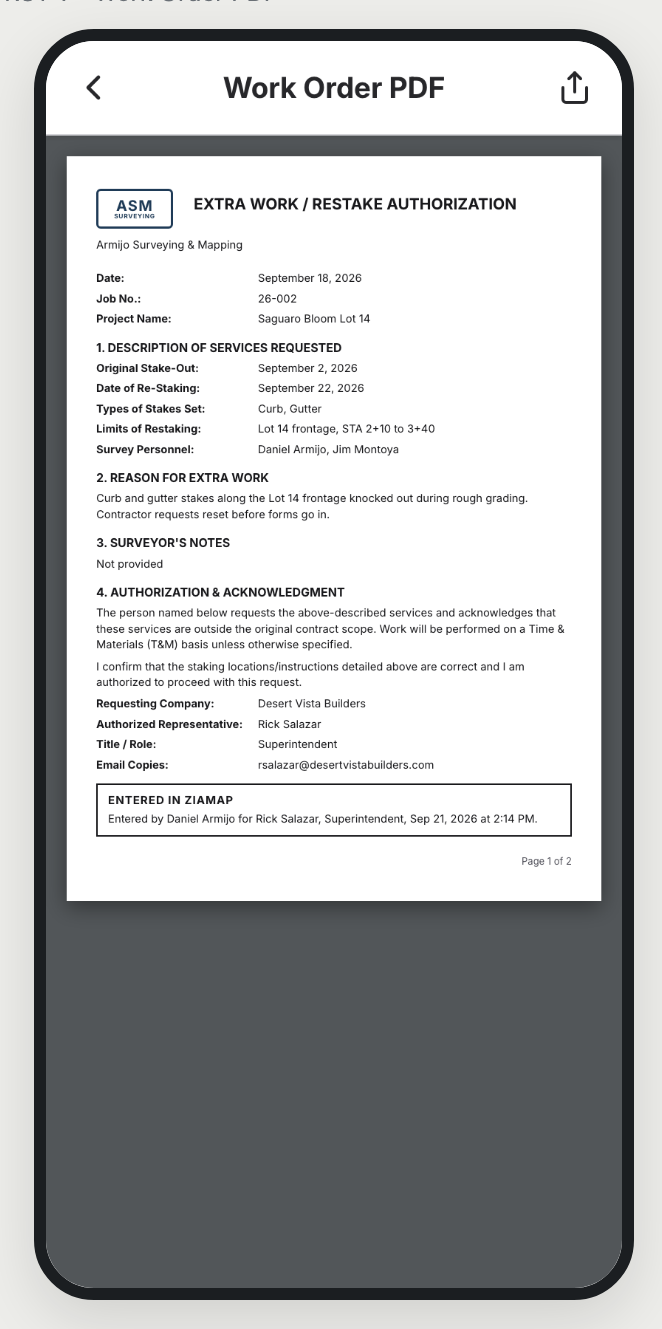 SUBMITTED · THE WORK ORDER PDF, ONE TAP TO SHARE
Solving everything at once.
We hit the ground with far too many features, thinking we could solve every problem in one release. We pulled back to the core pain points and now add features as customers ask for them.
To change a habit that's been around since the pyramids, don't ship everything. Fix the core pain first and let the people doing the work pull the rest.